There is a new thread on the website of the Chronicle of Higher Education today about whether we professors should teach annotation of your reading material.
I agree wholeheartedly that we should!
But, you say, how? It's really quite simple.
Step 1: In each paragraph, look for the main idea--the "big picture," (sorry, I know I overuse that cliche, but I can't come up with anything more appropriate) and then highlight that.Your goal is to be able to go back through the chapter and be able to read the highlights and get a full picture of what that chapter is about. Sure beats re-reading the whole thing.
Step 2: Put a symbol of some sort in the margin for particularly important, surprising, or opinion-based ideas. For example, if something is clearly very important--like the first time that something ever happened or something that changed everything that came afterward, put a star in the margin. If it's something that really surprises you, put an exclamation mark in the margin. For statements that are the author's opinion (something that someone else might be able to argue), put a check mark in the margin.
Step 3: when it's time to review for a quiz or an exam, go back and read those underlinings and note the margin symbols.
Step 4: to figure out the main point of an article--what the author is arguing and what you should remember about that argument--go back and re-read just those underlinings that have a check mark next to them. Go through all of them, write the most important ones down in your notebook or computer file, and then you've got a good idea of that author's thesis.
Try this system or any variation you think will work for you. Trust me: it will make a difference. I have an awful memory and yet I managed to get through my doctoral comprehensive exams (written and oral testing of 160 books!) using this system. Without it, I never would have made it.
If you have another system, let's hear about it. Not every system will work for everyone. The point is to start talking about this and to start doing it. The bookstore is not going to give you any more money for your book if you sell it back to them in pristine condition. So, mark away!
Friday, October 19, 2012


Friday, October 5, 2012
Oftentimes?
What has happened to the word often? This useful, simple, common word has apparently gone through a metamorphosis, but I can't figure out why.
First, people started to pronounce the t. "Off-ten," they would say. Why? Where did the long-silent t go? Did people think this sounded more erudite or more sophisticated?
Now, people are saying and writing oftentimes instead of the much simpler, much preferable often. Again, why?
And now I've noticed that people are saying the totally unnecessary oftentimes with that t pronounced.
So, my question for today is this: why? Do people think that saying oftentimes (with the t) sounds better or smarter?
Here's what I maintain: if a simple word is working, don't mess with it. All those oftentimes-types out there, please put that word away: often will work just fine.
First, people started to pronounce the t. "Off-ten," they would say. Why? Where did the long-silent t go? Did people think this sounded more erudite or more sophisticated?
Now, people are saying and writing oftentimes instead of the much simpler, much preferable often. Again, why?
And now I've noticed that people are saying the totally unnecessary oftentimes with that t pronounced.
So, my question for today is this: why? Do people think that saying oftentimes (with the t) sounds better or smarter?
Here's what I maintain: if a simple word is working, don't mess with it. All those oftentimes-types out there, please put that word away: often will work just fine.
Tuesday, October 2, 2012
Exam Writing Advice Redux
I am cutting and pasting here a blog post from March 2011. As we approach exam time, I think it's a good idea to revisit advice on how to write a good essay exam answer. Here is the text of the original March 31, 2011 post:
This post is for all my students, present, past, and future. I am writing to offer advice today on how to write essay or short-answer or identification exams.
First, read the question carefully. Then read it again--carefully. Then read it a third time, underlining any important words such as "most" or "major." Then don't start writing.
But, I'm pressed for time, I hear you say. And, yes, of course, there are time constraints on exams. Some of us can work quickly, and some of us need more time to compose our thoughts. Knowing the clock is ticking can make many quite nervous. But, still I say don't start writing--unless it is to make a list.
If you take the time to think about exactly what the question is asking and then start to formulate an answer by pulling an idea from here and a component from there, you will wind up with a much better answer. So, don't start writing right away.
Essay and short answer questions are designed to make you think. They are not intended to be the kind of answer that you can memorize and then just write down. So, taking time to think about the answer--wracking your brain, if you will, is crucial.
There are two most important components to an essay or short answer. The first is that your answer pertains to what the question is asking and ONLY what the question is asking. The second is that your answer is complete. If you leave something critical out, you will not get full credit.
Once you've determined that your list is complete and pertains to only that subject the question is asking about, then you can start writing. And then the writing should go pretty smoothly and quickly.
This method sounds as if it will take too much time, but for most people it will probably take less time or the same amount of time. And it will result in a significantly better score.
So, be sure to take the time to think about all the possible components that would need to go into a complete answer, make lists of those things, then look at the list and cross out any that don't specifically pertain to that individual question.
Then you can start writing. If there is interest, I will write more about answering essay-type answers for history exams in the future. If you want more tips, just let me know by leaving a comment or mentioning this blogpost to me after class.
This post is for all my students, present, past, and future. I am writing to offer advice today on how to write essay or short-answer or identification exams.
First, read the question carefully. Then read it again--carefully. Then read it a third time, underlining any important words such as "most" or "major." Then don't start writing.
But, I'm pressed for time, I hear you say. And, yes, of course, there are time constraints on exams. Some of us can work quickly, and some of us need more time to compose our thoughts. Knowing the clock is ticking can make many quite nervous. But, still I say don't start writing--unless it is to make a list.
If you take the time to think about exactly what the question is asking and then start to formulate an answer by pulling an idea from here and a component from there, you will wind up with a much better answer. So, don't start writing right away.
Essay and short answer questions are designed to make you think. They are not intended to be the kind of answer that you can memorize and then just write down. So, taking time to think about the answer--wracking your brain, if you will, is crucial.
There are two most important components to an essay or short answer. The first is that your answer pertains to what the question is asking and ONLY what the question is asking. The second is that your answer is complete. If you leave something critical out, you will not get full credit.
Once you've determined that your list is complete and pertains to only that subject the question is asking about, then you can start writing. And then the writing should go pretty smoothly and quickly.
This method sounds as if it will take too much time, but for most people it will probably take less time or the same amount of time. And it will result in a significantly better score.
So, be sure to take the time to think about all the possible components that would need to go into a complete answer, make lists of those things, then look at the list and cross out any that don't specifically pertain to that individual question.
Then you can start writing. If there is interest, I will write more about answering essay-type answers for history exams in the future. If you want more tips, just let me know by leaving a comment or mentioning this blogpost to me after class.
Wednesday, September 12, 2012
The Seven Coolest Presidents in US history? Let's Make it Ten
Recently, NPR (National Public Radio) broadcast a piece on the "7 Coolest Presidents in American History."* You can read the story here:
"The 7 Coolest Presidents in American History"
I think this is all well and good, to use the old phrase, but how about making it the Ten Coolest Presidents in American History?
I'll start the conversation by putting into nomination the name of Abraham Lincoln. In terms of coolness in the face of seemingly insurmountable problems and overwhelming national division, Lincoln remained truly "cool."
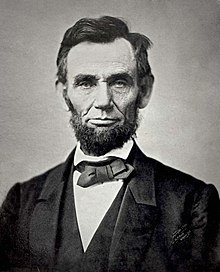 Anyone care to nominate presidents # 9 and #10 for our list?
* Note: While style manuals insist that numbers below ten should be spelled out, I have not done so here because this is the way the NPR story has its headline. It's extremely important that scholars quote words exactly as they find them, even if that appears to be wrong.
"The 7 Coolest Presidents in American History"
I think this is all well and good, to use the old phrase, but how about making it the Ten Coolest Presidents in American History?
I'll start the conversation by putting into nomination the name of Abraham Lincoln. In terms of coolness in the face of seemingly insurmountable problems and overwhelming national division, Lincoln remained truly "cool."
* Note: While style manuals insist that numbers below ten should be spelled out, I have not done so here because this is the way the NPR story has its headline. It's extremely important that scholars quote words exactly as they find them, even if that appears to be wrong.
Tuesday, September 11, 2012
The importance of proofreading
A few days ago, I posted an entry about the president's acceptance speech at the Democratic National Convention.
I am an inveterate proofreader--I even proofread my emails before I send them, and who does that?
Anyway, I did my usual proofreading before I published the blog post. Imagine my chagrin when I looked at my blog this morning and found a big, old, nasty mistake in the headline. I had written "Did the president said what many Americans don't want to hear?" Egad.
This is a perfect example of why I always suggest to students that they have someone else proofread their important papers and assignments. Often, we don't see our own mistakes. My last blogpost is a perfect example.
So do as I say, not as I do. Have someone else read your writing before submission. It could save you from all kinds of embarrassment--and could have saved me from having to write this post!
I am an inveterate proofreader--I even proofread my emails before I send them, and who does that?
Anyway, I did my usual proofreading before I published the blog post. Imagine my chagrin when I looked at my blog this morning and found a big, old, nasty mistake in the headline. I had written "Did the president said what many Americans don't want to hear?" Egad.
This is a perfect example of why I always suggest to students that they have someone else proofread their important papers and assignments. Often, we don't see our own mistakes. My last blogpost is a perfect example.
So do as I say, not as I do. Have someone else read your writing before submission. It could save you from all kinds of embarrassment--and could have saved me from having to write this post!
Friday, September 7, 2012
Did the President Say What Many Americans Don't Want to Hear: or Did He Strike the Right Tone?
In his acceptance speech at the Democratic National Convention last night, President Obama gave a very different message than he did in the same speech four years ago.
In 2008, Obama's overall message was one of "hope and change." Four years later, the message is considerably toned-down. He said, "you didn't elect me to tell you what you wanted to hear. You elected me to tell the truth."
Maybe that made for a good sound bite and maybe that statement should be true, but history would tell Obama a different story. In the midst of a staggering economic downturn at the end of the 1970s that was bleeding over into 1980, Ronald Reagan beat Jimmy Carter, not because people wanted to hear the truth, but because they wanted a leader who would make them feel better about themselves. Jimmy Carter, president from 1977 to 1980, had tried to tell the American people "the truth," and the response was either flat or negative (depending on whether you see the glass as half full or half empty).
The lesson from the Carter-Reagan election of 1980 should be that the American people don't want their president to "tell the truth" if that message is that hard times are going to linger and belts need to be tightened. If Romney can send a more positive message, and I'm sure that he will try, he may be following the lessons of Reagan. Obama would do well not to emulate Jimmy Carter. (remember, he lost).
In his acceptance speech at the Democratic National Convention last night, President Obama gave a very different message than he did in the same speech four years ago.
In 2008, Obama's overall message was one of "hope and change." Four years later, the message is considerably toned-down. He said, "you didn't elect me to tell you what you wanted to hear. You elected me to tell the truth."
Maybe that made for a good sound bite and maybe that statement should be true, but history would tell Obama a different story. In the midst of a staggering economic downturn at the end of the 1970s that was bleeding over into 1980, Ronald Reagan beat Jimmy Carter, not because people wanted to hear the truth, but because they wanted a leader who would make them feel better about themselves. Jimmy Carter, president from 1977 to 1980, had tried to tell the American people "the truth," and the response was either flat or negative (depending on whether you see the glass as half full or half empty).
The lesson from the Carter-Reagan election of 1980 should be that the American people don't want their president to "tell the truth" if that message is that hard times are going to linger and belts need to be tightened. If Romney can send a more positive message, and I'm sure that he will try, he may be following the lessons of Reagan. Obama would do well not to emulate Jimmy Carter. (remember, he lost).
But there are clear signs that Obama has learned from the missteps of Jimmy Carter. Toward the end of Obama's acceptance speech, he said, "as I stand here tonight, I have never been more hopeful about
America. Not because I think I have all the answers.
Not because I’m naive about the magnitude of our challenges.I’m hopeful because of you."
Starting with a cautionary tone, he finished strong. And he finished positive. He has clearly paid attention to history.
Saturday, September 1, 2012
"Me and my buddies"?
Why is that so many well-educated, smart, ambitious young people now routinely say something like "Me and my buddies wanted to play the game so we downloaded it last night."
Really? "me" as the subject of a sentence? Would you ever dream of saying "Me wanted to play the game so I downloaded it last night"? Of course not. You know better. And no one wants to sound like Cookie Monster once you've passed your tween years.
So, why say "me and my buddies" as the subject of a sentence? Where did this come from? I never heard this, except from uneducated people, before a few years ago. I know that language changes with the times, and some of those changes are good and necessary, but this one is awful.
I don't know how to say this without sounding obnoxious, but if you speak this way in a job interview or at a meeting, you will sound uneducated.
Do yourself a favor. Listen to what you say (something few of us do) and see if you say "me and my...." routinely. If you find you're doing it, stop. "Me and my friends" as the subject simply must be changed to "My friends and I."
Please.
And if any of you can enlighten me as to where you think this came from, I'd love to hear your ideas.
Really? "me" as the subject of a sentence? Would you ever dream of saying "Me wanted to play the game so I downloaded it last night"? Of course not. You know better. And no one wants to sound like Cookie Monster once you've passed your tween years.
So, why say "me and my buddies" as the subject of a sentence? Where did this come from? I never heard this, except from uneducated people, before a few years ago. I know that language changes with the times, and some of those changes are good and necessary, but this one is awful.
I don't know how to say this without sounding obnoxious, but if you speak this way in a job interview or at a meeting, you will sound uneducated.
Do yourself a favor. Listen to what you say (something few of us do) and see if you say "me and my...." routinely. If you find you're doing it, stop. "Me and my friends" as the subject simply must be changed to "My friends and I."
Please.
And if any of you can enlighten me as to where you think this came from, I'd love to hear your ideas.
Tuesday, August 28, 2012
2009 Tobacco Warnings Probably Heading to the Supreme Court
Of constitutional interest to us all are the 2009 tobacco warnings created by Congress. These new, far more graphic messages about the health dangers of smoking have been challenged by tobacco companies as infringements of their rights to corporate free speech. Now, two appeals courts have ruled, one upholding the warnings and one striking them down.
That sort of disagreement within the lower federal courts is a typical justification for the Supreme Court to agree to hear the cases. So, look for further developments on this issue. I'll keep you posted.
Share your thoughts: do you think these warnings infringe on free speech? [You can leave comments anonymously, if you wish.]

That sort of disagreement within the lower federal courts is a typical justification for the Supreme Court to agree to hear the cases. So, look for further developments on this issue. I'll keep you posted.
Share your thoughts: do you think these warnings infringe on free speech? [You can leave comments anonymously, if you wish.]
Tuesday, June 12, 2012
What I'm reading/listening to this summer
As a teacher, I'm always looking for information to add to my lectures and discussions. So, my summers and winter break are usually spent behind book covers or with an iPod stuck to my head. So far this summer, I've read City Horse (marvelous topic but could have been an article rather than an entire book), and Paul Grohndal's intriguing biography of Albany's forever-seeming mayor, Erastus Corning (he was in office for 40 years....really). Now I'm reading City of Scoundrels: The 12 Days of Disaster That Gave Birth to Modern Chicago and I'm listening to Island of Vice: Theodore Roosevelt's Doomed Quest to Clean Up Sin-Loving New York.
For my 12-hour drive home to North Carolina last month, I listened to The Help. I am completely torn about its historical accuracy--it is after all a novel--but I surely did enjoy the dramatic and convincing narration. My marathon trip seemed more like six or eight hours than the the half orbit around the sun that it actually is.
I enjoy listening to books and lectures as I walk/run/ride-the-bus, and I strongly suggest this to my students. Sometimes I fantasize that all those earbuds I see on campus are playing Shakespeare or Proust rather than the hip-hop or Fall Out Boy I know is blasting out. But the problem with listening to a book rather than reading it, is the inability to slow it down where you'd like to spend more time and speeding it up when your hand would like to be flipping pages. The technology has allowed me, however, to expose myself to far more books and lectures than I ever could have had the time or the eyeball strength to have managed.
So, get out your iPod, find a good audiobook library (audible.com has a surprisingly large selection) and get listening. Here's a suggestion to get you started: Imagine: How Creativity Works.


For my 12-hour drive home to North Carolina last month, I listened to The Help. I am completely torn about its historical accuracy--it is after all a novel--but I surely did enjoy the dramatic and convincing narration. My marathon trip seemed more like six or eight hours than the the half orbit around the sun that it actually is.
I enjoy listening to books and lectures as I walk/run/ride-the-bus, and I strongly suggest this to my students. Sometimes I fantasize that all those earbuds I see on campus are playing Shakespeare or Proust rather than the hip-hop or Fall Out Boy I know is blasting out. But the problem with listening to a book rather than reading it, is the inability to slow it down where you'd like to spend more time and speeding it up when your hand would like to be flipping pages. The technology has allowed me, however, to expose myself to far more books and lectures than I ever could have had the time or the eyeball strength to have managed.
So, get out your iPod, find a good audiobook library (audible.com has a surprisingly large selection) and get listening. Here's a suggestion to get you started: Imagine: How Creativity Works.
Subscribe to:
Posts (Atom)